Why Your Twenties Are the Cheapest Time to Build Habits You'll Ever Get
Building a habit at twenty-five and building the same habit at forty-five require genuinely different amounts of effort, not because willpower changes, but because the twenties typically come with a degree of schedule flexibility and lower competing responsibility that makes new habits far cheaper to install now than they will be later.

Why Habit Formation Requires Less Willpower in Your Twenties Than It Will Later
The lower-cost window: the fewer-fixed-obligations-like-children-or-established-career-demands-leave-more-room-to-experiment-with-routine (the a genuinely lower number of competing fixed commitments in this decade compared to later ones — the fewer-obligations-leave-room-for-routine-experimentation), the the-a-flexible-daily-schedule-makes-it-easier-to-actually-find-and-protect-time-for-a-new-habit (the schedule flexibility directly translating into an easier time carving out consistent space for something new — the flexible-schedule-eases-finding-time), the the-habits-installed-now-become-the-default-baseline-that-later-decades-build-on-rather-than-fight-against (the an established routine functioning as inherited infrastructure for future decades rather than something to construct from scratch later — the early-habits-become-inherited-baseline-later), and the reframe (the twenties offering a genuinely lower-cost window for habit formation, not because willpower is stronger, but because there’s simply less already competing for the same time and energy).

The Specific Reason Lifestyle Flexibility Matters for Building Lasting Routines
Why flexibility specifically helps: the a-flexible-schedule-allows-trial-and-error-to-find-what-time-of-day-a-habit-actually-sticks (the the freedom to experiment with different routines without rigid external constraints dictating the only option — the flexibility-allows-trial-and-error-timing), the the-fewer-competing-priorities-means-a-new-habit-faces-less-immediate-pressure-to-be-abandoned-under-stress (the a less crowded set of daily demands giving a new habit more room to survive its early fragile period — the fewer-priorities-protects-new-habit-in-fragile-period), the the-social-and-living-situations-in-this-decade-often-allow-easier-adjustment-around-a-new-routine-than-more-fixed-later-life-structures (the more adaptable living and social circumstances making room for a new routine more easily accommodated — the adaptable-circumstances-accommodate-new-routine), and the frame (flexibility specifically mattering because it allows the trial-and-error and protected space a new habit needs to survive its fragile early period, something a more rigid life structure has far less room for later).
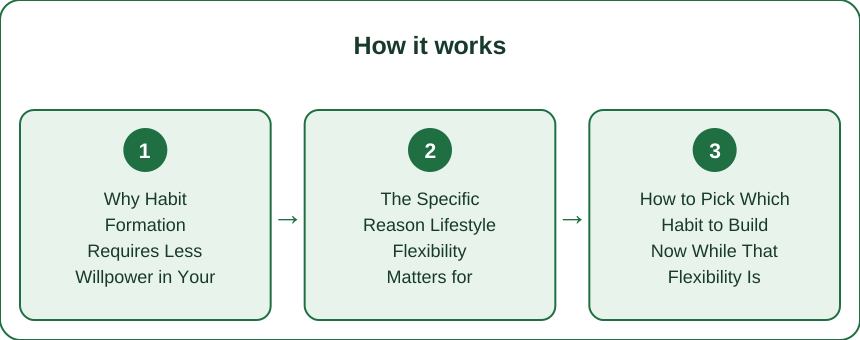
How to Pick Which Habit to Build Now While That Flexibility Is Highest
The selection approach: the choose-a-habit-that-compounds-meaning-it-gets-more-valuable-the-longer-its-maintained-rather-than-a-one-off-fix (the prioritizing habits with long-term compounding value over short-term but non-compounding fixes — the choose-compounding-habit-over-one-off-fix), the the-prioritize-a-foundational-habit-like-consistent-sleep-or-movement-over-a-more-niche-or-trendy-one (the foundational habits supporting everything built on top of them later, unlike narrower trend-driven ones — the prioritize-foundational-over-niche-habit), the the-start-now-specifically-because-the-flexible-window-narrows-with-each-added-life-responsibility (the treating the current level of flexibility as a temporary and narrowing resource rather than a permanent condition — the start-now-since-flexibility-narrows-over-time), and the frame (choosing a compounding, foundational habit and starting it now specifically because the flexible window that makes it easier narrows with every added responsibility that comes later).
Building a habit at twenty-five and building the same habit at forty-five require genuinely different amounts of effort, not because willpower changes, but because the twenties typically bring fewer fixed obligations like children or established career demands, leaving more room to experiment with routine and actually find time for something new — habits installed now become the inherited baseline that later decades build on rather than construct from scratch. That flexibility matters specifically because it allows the trial-and-error needed to find what time of day a habit actually sticks, and it gives a new, fragile habit more room to survive under less competing pressure than a more rigid later-life structure allows. Pick which habit to build now by choosing one that compounds in value the longer it’s maintained rather than a one-off fix, prioritizing a foundational habit like consistent sleep or movement over a narrower trend-driven one, and starting now specifically because this flexible window narrows with every added responsibility that comes later.
Keep Reading
This article is for general informational and styling purposes only. Fit, sizing, and product availability may vary.