Money as a Wellness Habit: The Twenties Financial Foundations That Lower Lifetime Stress
Money is the twenties’ quietest wellness variable — the financial stress that disturbs sleep and relationships more than most health habits help — and the decade’s compound-interest math makes early foundations disproportionately powerful. The money-wellness guide.

The Money-Stress Connection
Why finance is health: the stress research (the financial worry ranking among top stressors — the sleep-and-relationship tolls from the stress doctrine; the money anxiety being a physical-health input), the scarcity-bandwidth science (the money worry consuming cognitive capacity — the decision-quality tax; the poverty-and-bandwidth research applied at every scale), the avoidance spiral (the unopened statements and unchecked balances — the avoidance INCREASING the anxiety per the avoidance doctrine; the clarity being calmer than the fog even when the numbers are bad), the twenties leverage (the compound-interest decade — the early hundreds outweighing later thousands; the time being the twenties’ unfair advantage per the compound doctrine), and the wellness reframe (the budget as self-care infrastructure — the financial habits belonging beside the sleep-and-movement ones per the foundation doctrine).

The Foundation Checklist
The habits that compound: the emergency-fund start (the first 1000 as the anxiety floor — the one-month-expenses ladder next; the buffer converting emergencies into inconveniences per the buffer doctrine), the automation architecture (the pay-yourself-first transfers on payday — the automation-over-willpower law from the habit doctrine applied to savings; the invisible saving that survives motivation), the retirement-start urgency (the employer-match capture being free money — the small-percentage start; the twenties dollar being the portfolio’s hardest worker per the compound doctrine), the debt strategy (the high-interest debt attacked first — the avalanche-versus-snowball choice by psychology per the individual doctrine; the minimums-always floor), the budget-lite system (the fifty-thirty-twenty-style frames over penny-tracking — the sustainable awareness per the sustainable doctrine; the weekly ten-minute money check-in from the ritual doctrine), the credit-basics literacy (the score’s rent-and-loan consequences — the on-time-payments and utilization basics), and the insurance floor (the health coverage non-negotiable — the renter’s insurance cheapness).
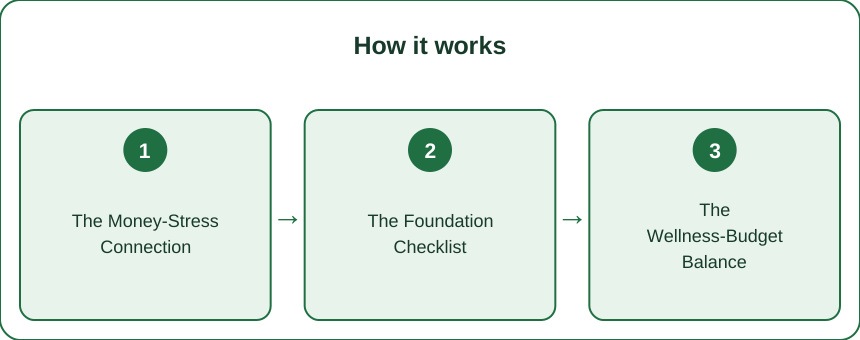
The Wellness-Budget Balance
Spending on health wisely: the wellness-spending audit (the subscriptions-and-boutique-classes honestly reviewed — the unused memberships from the declutter doctrine; the wellness industry’s twenties targeting per the marketing doctrine), the high-value health spending (the walking shoes, the home dumbbells and the groceries out-earning the boutique tier — the budget-fitness doctrine; the free-and-cheap movement menu), the social-spending wisdom (the connection being wellness — the friend dinners budgeted FOR per the connection doctrine; the experiences-over-things research; the cheap-hangout repertoire from the friendship doctrine), the comparison-spending trap (the lifestyle-inflation and the Instagram-keeping-up from the comparison doctrine — the values-based spending per the values doctrine), the future-self kindness (the saving framed as a gift to her — the identity continuity that makes saving stick per the identity doctrine), the help-and-literacy resources (the free financial education over the fee-heavy products — the fiduciary distinction learned early), and the closing frame (the twenties money habits as stress prevention with compound interest — the automated foundations, the honest check-ins, the wellness spending aimed; the future decades, quietly de-stressed; the wealth being, in the end, low financial anxiety). First 1000 banked, match captured, transfers automated: the foundation, poured while it’s cheap.
Money is a health input: financial worry taxes sleep, relationships and cognitive bandwidth — and avoidance makes it worse. The twenties checklist: a first $1000 buffer, automated payday transfers, the employer match captured (free money), high-interest debt attacked, and a weekly ten-minute money check-in. Audit the wellness subscriptions; walking shoes out-earn boutique classes.
Keep Reading
This article is for general informational and styling purposes only. Fit, sizing, and product availability may vary.