Why Sun Damage Prevention Matters More in Your Twenties Than You Think
Quick Answer: An estimated 80% of visible skin aging comes from cumulative sun exposure, and most of that damage happens well before it becomes visible — meaning your twenties are the highest-leverage decade for prevention, since consistent daily SPF now delays changes that would otherwise show up in your thirties and forties.
You can’t see UV damage accumulating today. That’s exactly what makes it easy to skip, and exactly why skipping it costs the most in this decade specifically.

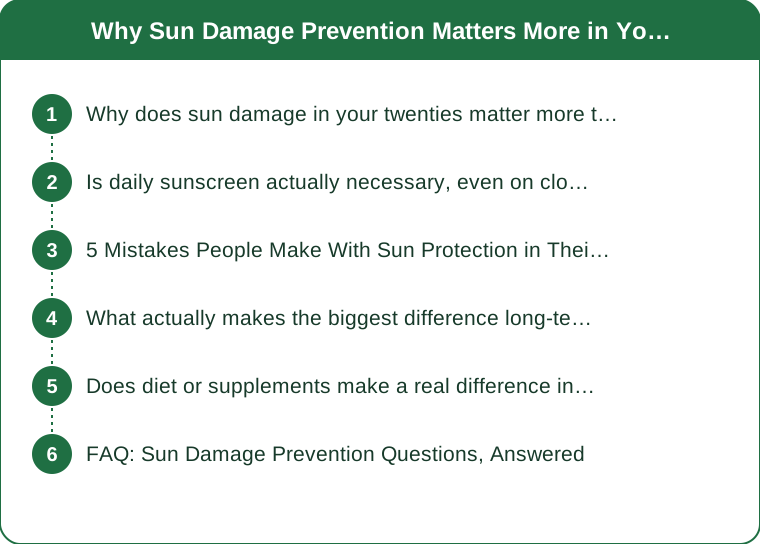
Why does sun damage in your twenties matter more than it seems?
Skin cell turnover and collagen production are still relatively strong in your twenties, which means damage from UV exposure now often gets partially masked by your skin’s own repair capacity — you look fine today while damage quietly accumulates underneath.
As that natural repair capacity gradually declines in later decades, previously masked damage becomes visible faster and more permanently. Prevention now is cheaper than correction later, in a very literal sense.
Is daily sunscreen actually necessary, even on cloudy or indoor days?
UV rays penetrate cloud cover significantly — up to 80% of UV can pass through overcast skies — and UVA rays (the aging-associated wavelength) pass through most window glass, meaning a desk near a window still counts as exposure.
A broad-spectrum SPF 30+ applied every morning, rain or shine, indoors or out, is the single highest-leverage skincare habit for this decade — more impactful than most serums or treatments people invest in instead.
5 Mistakes People Make With Sun Protection in Their Twenties
1. Only applying sunscreen on obviously sunny beach days, missing the daily cumulative exposure from commutes and errands.
2. Skipping reapplication — most sunscreens need reapplying every 2 hours in direct sun, and a single morning application doesn’t cover a full day outdoors.
3. Ignoring hands and neck, two of the most visible early-aging areas that get skipped in a typical face-focused routine.
4. Assuming darker skin tones don’t need SPF — everyone’s skin, regardless of tone, accumulates UV damage, even though visible burning may differ.
5. Relying on makeup with SPF alone, which rarely provides enough coverage or reapplication to meaningfully protect on its own.

What actually makes the biggest difference long-term?
Consistency beats intensity — a moderate SPF applied daily for years outperforms an expensive high-SPF product used only occasionally. Building the habit now, while it’s easy and low-stakes, is what actually compounds.
Wide-brim hats and UPF clothing (see [[upf-clothing-guide]] style resources) add meaningful protection for long outdoor stretches — hiking, beach days, gardening — where reapplication alone isn’t quite enough.
Does diet or supplements make a real difference in sun protection?
Some antioxidant-rich foods (tomatoes, leafy greens, foods high in vitamin C and E) are associated with modest additional protection against UV-related skin damage in research, but none come close to replacing topical SPF — they’re a minor complement, not an alternative.
Be cautious of supplement marketing claiming ‘internal sunscreen’ effects; the evidence for meaningful standalone UV protection from any oral supplement is thin at best, and relying on one instead of SPF is a real risk, not just an inefficiency.
FAQ: Sun Damage Prevention Questions, Answered
Does sunscreen in your twenties actually prevent wrinkles later?
Strong evidence supports this — consistent SPF use is one of the most reliably documented interventions for reducing visible photoaging over time.
Is SPF 30 enough, or do you need SPF 50?
SPF 30 blocks about 97% of UVB rays and SPF 50 about 98% — the practical difference is small; consistent application matters far more than the exact number.
Can sun damage from your twenties be reversed later?
Some improvement is possible with dermatological treatments later, but prevention is both cheaper and more effective than any correction — this is general information, not medical advice.
TL;DR:
- UV damage accumulates invisibly in your twenties, masked by strong natural skin repair
- Cloud cover and windows don’t block UVA — daily SPF matters rain or shine, indoors or out
- Consistency beats a single intense application; build the habit now while it’s easy
- Hands and neck are commonly skipped high-visibility aging areas
The sunscreen you apply this decade is quietly doing more for your forties than almost anything else in your routine.
Keep Reading
This article is for general informational and styling purposes only. Fit, sizing, and product availability may vary.