Why the Sleep Debt You Ignore in Your Twenties Compounds Quietly
In your twenties, sleep feels almost optional. You can run on five hours, function on caffeine, and recover from a rough night faster than you ever will again. That resilience is real, and it is exactly what makes chronic under-sleeping so easy to normalize now. Here is what sleep debt actually is, why the resilience of your twenties hides its true cost, and how to build a sleep habit that does not depend on being young forever.

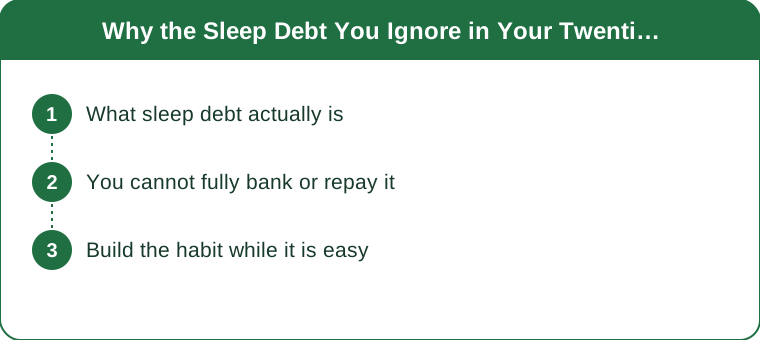
What sleep debt actually is
Sleep debt is the running gap between the sleep your body needs and the sleep it gets. Miss an hour here and two hours there across a week, and the deficit accumulates like an overdrawn account. The reason it feels invisible in your twenties is that your body compensates hard, masking the shortfall with adrenaline and caffeine. But the debt does not disappear because you cannot feel it. It shows up as slower thinking, weaker mood regulation, worse recovery from workouts, and a hunger for sugar you did not have when you were rested.

You cannot fully bank or repay it
The popular idea that you can sleep in on the weekend and reset the week is only half true. A long lie-in helps a little, but it does not fully repair the cognitive and metabolic effects of five straight nights of too little sleep, and it scrambles your body clock enough to make the next week harder. The same goes for banking sleep ahead of a big push. Sleep does not behave like a savings account you can raid and refill on demand; consistency does far more than dramatic swings ever will.
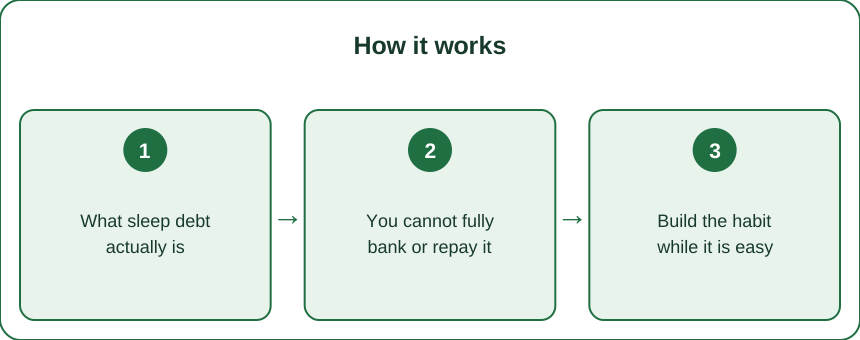
Build the habit while it is easy
The twenties are the cheapest time to build a durable sleep routine, precisely because the stakes feel low. Pick a consistent sleep and wake time and hold it within an hour even on weekends. Get morning light early to anchor your body clock, and cut the scroll before bed that quietly steals an hour a night. You are not aiming for perfection or an early bedtime you will resent. You are building a default that keeps working when your recovery slows down, as it inevitably will.
The resilience of your twenties is a gift, but it is also a disguise, because it lets you carry sleep debt without feeling the bill. That debt still accrues, dulling your thinking, mood, and recovery in ways you attribute to everything except the obvious. You cannot fully repay it on weekends or bank it in advance, so the real move is consistency: a steady sleep and wake window, morning light, and a hard stop on the late scroll. Build that default now while the cost of ignoring it feels small, and you carry a working habit into the decades when it stops being optional. This is general information, not medical advice.
Keep Reading
This article is for general informational and styling purposes only. Fit, sizing, and product availability may vary.