Why Hangovers Change in Your Late Twenties
Quick Answer: The biggest change is not how your body processes alcohol - liver enzyme capacity is fairly stable through this period. What changes is everything around it: sleep architecture becomes more fragile, so alcohol-driven REM suppression and second-half fragmentation cost more; recovery capacity from any stressor declines gradually; and your life stopped supplying the twelve-hour recovery window that made a big night survivable at 22. Most of what is now called a hangover is a sleep deprivation event with a chemical trigger.
Three drinks. Three. At 22 that was a Tuesday.
Now it is a full day of feeling like you are watching your own life through a slightly delayed video feed.

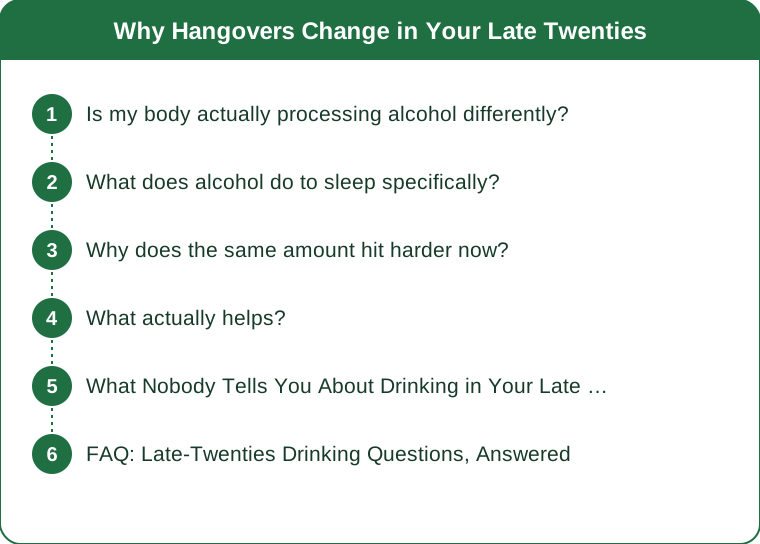
Is my body actually processing alcohol differently?
Less than people assume. Alcohol dehydrogenase capacity does not drop sharply in the twenties, and elimination rate stays roughly stable.
Body composition shifts do matter a little. Alcohol distributes in body water, so a gradual change in the ratio of muscle to fat raises blood alcohol concentration from the same drink.
Total body water declines slowly with age, which pushes the same direction.
Medication interactions become more common, and plenty of ordinary prescriptions interact with alcohol in ways that were not in the picture at 21.
But the elimination side is a modest contributor. The large changes are elsewhere.
Which is why the answer is not simply drinking less per occasion, though that helps.
What does alcohol do to sleep specifically?
It shortens the time to fall asleep and then degrades the night. Sedation is not sleep, and the initial drowsiness is misleading.
REM sleep is suppressed in the first half, which is the stage most associated with emotional processing and memory consolidation.
The second half fragments as alcohol clears, producing a rebound with more awakenings, lighter sleep and often the 3am wake-up.
Heart rate stays elevated overnight, which is why wearables show a poor recovery score after even moderate drinking.
Thermoregulation is disrupted too, and the night sweats after drinking are part of the same picture.
So the day after is a sleep-deprived day with a chemical component, which explains why the symptoms look so much like a bad night.
Why does the same amount hit harder now?
Sleep quality was already declining before alcohol touched it. Deep sleep begins its long decline in the twenties, so alcohol is subtracting from a smaller total.
Recovery capacity from any stressor declines gradually, which shows up in training and in hangovers alike.
Cumulative sleep debt is higher. A late night at 27 usually lands on a base of five or six workday nights that were already short.
The recovery window disappeared. At 20 you could sleep until 2pm; at 27 there is something on Saturday morning, and that missing window is a bigger factor than most people credit.
Baseline stress is higher, so the physiological cost of a poor night compounds with the cost of everything else.
And the pattern changed shape - the same weekly volume spread over fewer, bigger nights is harder on the body than the same total spread evenly.

What actually helps?
Stop drinking earlier in the evening rather than drinking less overall, since giving your body two to three hours to clear alcohol before bed protects a meaningful share of the sleep.
Alternate with water, which addresses dehydration and paces intake at the same time.
Eat properly beforehand, which slows absorption and lowers peak blood alcohol from the same amount.
Protect the wake time the next morning. Sleeping until noon feels right and pushes the following night later, which is how one bad night becomes a bad weekend.
Get outdoor light and a gentle walk in the morning, which is more effective than most of the recovery products sold for the purpose.
And accept that light training is better than none - easy movement improves the following night, while a punishing session on a hangover mostly makes Sunday worse.
What Nobody Tells You About Drinking in Your Late Twenties
The wearable is telling you something real. Elevated resting heart rate, suppressed heart rate variability and reduced deep sleep after two drinks are consistently measurable. The reason a modest night now feels different is that it always did cost this much, and you did not have the data or the sensitivity to notice.
The last drink matters more than the total. Timing is a larger lever than volume for how you feel the next day. Four drinks finished by 9pm typically produces a better night than two finished at 1am, because the alcohol has cleared before the sleep that matters.
Anxiety the day after is a real physiological effect, not a personality flaw. The rebound after alcohol clears includes a shift in the nervous system toward over-arousal, and it lands on a brain that also lost REM sleep. It typically peaks in the late morning and fades through the day.
Hydration is oversold as the fix. Dehydration contributes to headache and thirst, and it is not the main driver of the fatigue, mood and cognitive symptoms. Drinking a litre of water before bed will not rescue a night whose sleep architecture was already dismantled.
The sugar in the drink matters more than the colour. Congeners in darker spirits get most of the blame, and mixers full of sugar produce a blood glucose swing that contributes substantially to the morning after. A spirit with soda usually costs less than the same alcohol in a sugary cocktail.
And the pattern shift is the real story of the late twenties. Drinking spread across the week bothers this age group far less than the same total concentrated into one big Saturday. If something has to change and you would rather not change the amount, changing the distribution is the underrated option.
FAQ: Late-Twenties Drinking Questions, Answered
How long before bed should I stop drinking?
Two to three hours is a practical target. It allows a meaningful portion to clear before the sleep phases that matter most.
Does eating before drinking really help?
Yes. Food, particularly with protein and fat, slows gastric emptying and lowers peak blood alcohol from the same amount consumed.
Are electrolyte drinks worth it?
They help with the dehydration component, which is a modest share of the symptoms. Useful, not transformative.
Why do I wake at 4am after drinking?
The sedative effect wears off and produces a rebound in alertness alongside fragmented sleep in the second half of the night. It is the most reliable signature of alcohol on sleep.
Should I exercise with a hangover?
Light movement and outdoor light help. Hard training on poor sleep and dehydration raises injury risk and does not speed recovery.
Is it normal for this to change so noticeably at 27?
Very common. The combination of declining deep sleep, higher baseline sleep debt and the loss of a long recovery window arrives for most people in the late twenties.
This is general information, not medical advice.
TL;DR:
- Alcohol elimination barely changes in your twenties - sleep quality, recovery capacity and schedule do.
- Alcohol suppresses REM early and fragments the second half of the night, so the day after is largely sleep deprivation.
- Timing beats volume: stopping two to three hours before bed protects more than drinking slightly less.
- Hold your wake time, get morning outdoor light, and keep movement light.
- Spreading the same weekly amount out costs less than concentrating it into one big night.
It was never really about the drinks. It was about the sleep they took.
Keep Reading
This article is for general informational and styling purposes only. Fit, sizing, and product availability may vary.